

1. Uphill Razor
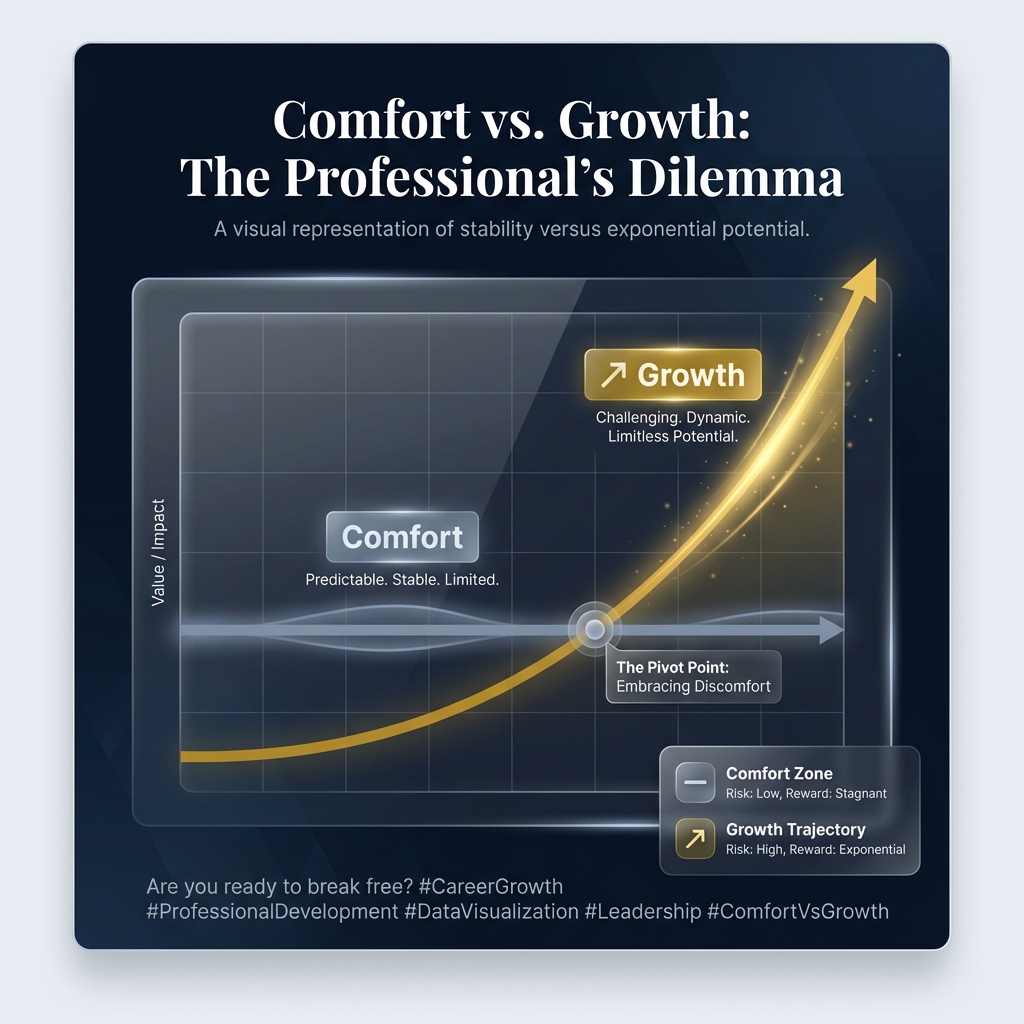
"When in doubt, choose the harder path."
My career fork in 2019:
Option A: Stay in the traditional supply chain role. Comfortable. Predictable. Safe.
Option B: Learn Python, AI, and automation from scratch. Uncomfortable. Uncertain. Risky.
I chose B.
Five years later, the Option A leaders are still fighting the same fires they fought in 2019 — and worrying about AI replacing them. I'm building AI agents, running automations that save 14 hours per week, and leading digital transformation.
Short-term pain. Long-term leverage.
2. Feynman Razor
"If you can't explain it simply, you don't understand it."
I use this three ways.
On myself — learning check. After reading a supply chain article or an AI paper, I ask: can I explain this to my wife in two sentences? If no, I didn't actually learn it. Re-read. Forces depth, not surface knowledge.
On others — bullshit detector. Vendor pitch: "Our proprietary neural network leverages quantum synergies…" Me: "Explain how this works. Like I'm 10." If the word salad continues, I pass. Saved me months of wasted pilots and six-figure budgets.
On my team — teaching multiplier. Old way: send a 10-page process doc. New way: "Explain this back to me in 3 bullets." They actually understand instead of nodding, I find gaps in my own explanation, and documentation improves. Win-win-win.
3. Rooms Razor

"Always be the dumbest person in the room."
Before accepting any meeting or event, I ask one question: will I be challenged here? Will I learn something new?
If yes — block 30 minutes before to prepare questions. If no — decline, or send a junior team member.
Accepted recently: coffee with a CTO who built an AI supply chain system. A panel with logistics leaders from Tesla and Amazon. A mastermind group with founders ten years ahead of me.
Declined recently: networking mixers with no learning outcome. Committee meetings where my input wasn't needed. Conferences where I'd be the most experienced speaker.
The math is simple. If you're the smartest person in the room, your ceiling equals your current knowledge. If you're the "dumbest," your ceiling equals the combined knowledge of the masters around you.
Compound that over five years. You're not in the same league anymore.
My decision framework
When facing a fork, I run three checks:
Uphill: Which path is harder? That's probably the one with more growth.
Feynman: Do I actually understand this? If not, go deeper before deciding.
Rooms: Will this put me around people better than me? If yes, prioritize.
Reality check
Every time you choose the easy path, you learn less, grow slower, and become more replaceable.
Every time you choose discomfort strategically, skills compound, opportunities multiply, and you become irreplaceable.
The challenge
This week, apply one razor:
Uphill: Choose one hard task you've been avoiding and do it.
Feynman: Explain your job to someone in three sentences.
Rooms: Decline one meeting where you're the expert. Find one where you're not.
Are you choosing growth this week?